


If This Sounds Like You…
You grill on weeknights and want food fast.
Better Choice
Gas Grill
|
|
Time to read 11 min
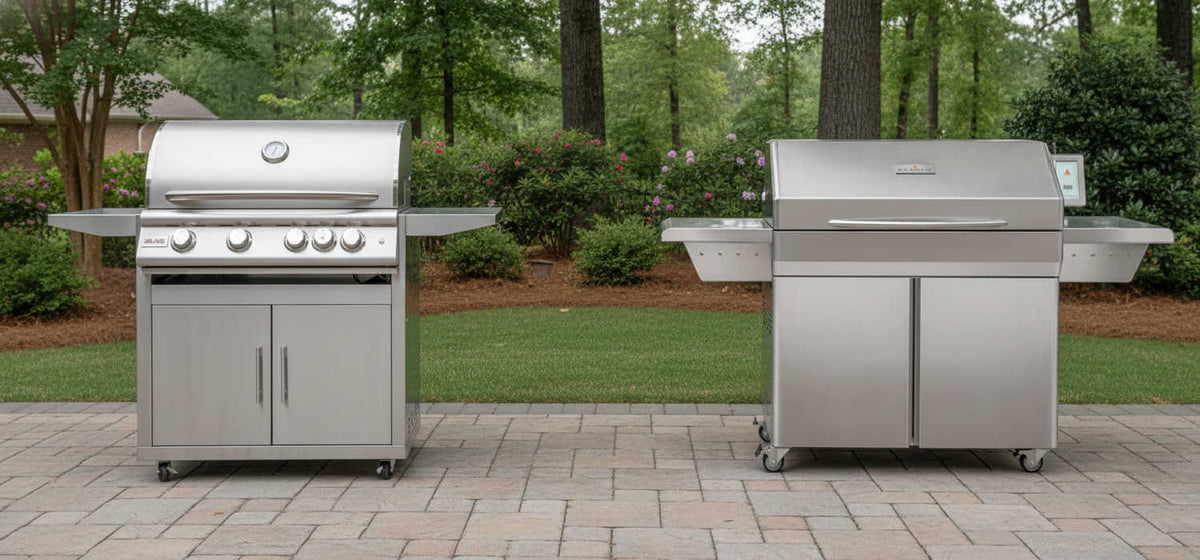
Choosing between a pellet grill and a gas grill isn’t about which one is “better” overall—it’s about how each one actually cooks. Both grills can make great food, but they do it in very different ways that affect flavor, heat control, and how you use them day to day. This guide breaks down those differences clearly so you can decide which grill fits how you cook.
A pellet grill uses wood pellets and indirect heat to cook food with steady temperature control and light smoke flavor, making it well-suited for low-and-slow cooking. A gas grill uses propane for fast startup and direct, high-heat grilling, which is better for quick meals and searing but produces little smoke flavor without added wood.
Neither grill is universally better—it depends on how you cook. A gas grill is better for fast, high-heat grilling and simple weeknight meals, while a pellet grill is better for low-and-slow cooking with steady temperature control and light smoke flavor.
| If This Sounds Like You… | Better Choice |
|---|---|
| You grill on weeknights and want food fast. | Gas Grill |
| You want strong high-heat searing for steaks. | Gas Grill |
| You cook ribs, brisket, or pork shoulder. | Pellet Grill |
| You want set-and-forget temperature control. | Pellet Grill |
| You prefer simple operation and easier cleanup. | Gas Grill |
| You care more about smoke flavor than speed. | Pellet Grill |
If This Sounds Like You…
You grill on weeknights and want food fast.
If This Sounds Like You…
You want strong high-heat searing for steaks.
If This Sounds Like You…
You cook ribs, brisket, or pork shoulder.
If This Sounds Like You…
You want set-and-forget temperature control.
If This Sounds Like You…
You prefer simple operation and easier cleanup.
If This Sounds Like You…
You care more about smoke flavor than speed.
If you’re still unsure, the choice usually comes down to cooking pace versus cooking style. Gas grills favor fast, high-heat grilling with minimal setup, while pellet grills favor longer cooks with consistent temperature and light smoke flavor. There isn’t a universal “better” grill—only the one that fits how you cook most often.
Cooking style is where the difference between a pellet grill and a gas grill becomes obvious. One relies on indirect heat and steady temperatures for longer cooks, while the other uses direct flame for fast, high-heat grilling. Let's dig into how each grill cooks to match your style.

Pellet Grill Cooking Style

Gas Grill Cooking Style
A gas grill definitely heats up much faster than a pellet grill. Gas grills focus on direct, high-heat grilling. A pellet grill is more focused on indirect heat and can deliver more flavor during longer cooks.
Heat control is one of the most confusing differences between pellet grills and gas grills. Both can cook great food, but they manage temperature in very different ways, which affects how fast you cook and how consistent the results are.Let's look at how each grill handles heat in real use.

Temperature Control on a Pellet Grill

Temperature Control on a Gas Grill
Direct heat cooks food directly over the heat source, such as burners or flames. This method is hot and fast, making it ideal for searing steaks, cooking burgers, and grilling foods where the lid is opened frequently.
Indirect heat cooks food away from the heat source, using circulating hot air more like an oven. This slower, more even method is better for larger or thicker foods like ribs, brisket, whole chickens, and roasts, where consistent temperature matters more than speed.
.
For a deeper breakdown, see our full guide on Direct vs Indirect Grilling Heat
Flavor is where people get surprised. Pellet grills can add real wood smoke flavor, but they’re often cleaner and milder than a traditional smoker or charcoal grill. Gas grills don’t create smoke on their own, but you can add it with the right setup, giving you wood smoke flavors on your gas BBQ grill.

Does a Pellet Grill Add More Smoke Flavor?

Can a Gas Grill Produce Smoke Flavor?
Wood pellets create smoke as part of normal cooking, so the food can pick up wood-fired flavors during low-and-slow cooking. A wood pellet grill burns wood pellet fuel efficiently, the smoke is often cleaner and less intense than a traditional wood or charcoal smoker.
Gas burns clean and doesn’t create smoke flavor by itself. A gas grillls taste comes from searing and char, plus drippings hitting hot surfaces. If you want smoke flavor on a gas grill, you add it on purpose using wood chips or chunks in a smoker box, foil packet, or smoke tube—then cook with indirect heat so the smoke can circulate around the food.
This is the real-life difference most people feel: how you cook on a Tuesday night versus how you cook on a weekend. High-heat grilling is about speed and searing. Low-and-slow BBQ is about time, indirect heat, and turning tough cuts into tender ones.

Weeknight Cooking: Burgers, Hot Dogs, and Steaks

Low-and-Slow BBQ: Ribs, Brisket, and Pork Shoulder
If you mainly cook fast meals—burgers, hot dogs, and steaks—a gas grill usually fits better because high-heat grilling is its comfort zone. If you mainly cook ribs, brisket, or pork shoulder, a pellet grill usually fits better because it holds indirect heat steady for low-and-slow cooking.
If you truly want both styles often, the best choice comes down to what you do more. Some pellet grills can sear better than others, and a gas grill can “smoke” with added wood, but each grill still has a home-field advantage: gas for quick, high-heat grilling and pellet for steady low-and-slow barbecue.
Startup time and daily workflow affect how often you actually use a grill. Some grills are quick and flexible, while others take longer but require less hands-on attention once cooking starts. The difference matters more in real life than most specs.

How Long Does a Pellet Grill Take to Start?

How Long Does a Gas Grill Take to Start?
With a pellet grill, the workflow starts with loading pellets, setting a temperature, and waiting for the grill to stabilize. Once cooking begins, the grill feeds pellets automatically and manages airflow, so you spend less time adjusting heat and more time letting the cook run. This works well for long sessions where consistency matters more than speed.
With a natural gas or porpane grill, the workflow is more hands-on but faster. You turn on the burners, preheat, and control heat manually throughout the cook. There’s no fuel loading during cooking, but you’ll make more frequent adjustments as food moves between hotter and cooler zones.
Maintenance is one of the biggest differences people don’t think about until after they own a grill. Both pellet grills and gas grills need regular cleaning, but the type of cleanup — and how often it happens — is very different. The chart below shows what long-term ownership actually looks like.
| Maintenance Area | Pellet Grill | Gas Grill |
|---|---|---|
| Ash Cleanup | Regular ash removal from the burn area and firebox | No ash cleanup required |
| Grease Management | Grease tray and drip path need periodic cleaning | Drip trays and grease channels need regular cleaning |
| Heat Source Care | Burn pot, igniter, and auger should stay clear | Burners may need brushing to keep flames even |
| Interior Cleaning | More frequent vacuuming to remove ash buildup | Occasional scraping of grates and interior surfaces |
| Electronics & Moving Parts | Digital controller, fan, and wiring require basic care | Minimal electronics on most models |
| Overall Effort | Moderate, especially with frequent low-and-slow cooks | Light to moderate, mostly grease and burner care |
Pellet grills generally require more routine maintenance because they produce ash and rely on moving parts like an auger and fan. The cleanup is not difficult, but it happens more often, especially if you cook low-and-slow regularly.
Gas grills usually require less frequent cleanup, focused mostly on grease management and burner care. There’s no ash to deal with, and most maintenance can be done quickly after cooking.
For a step-by-step breakdown of burner, grate, and grease-tray care, see our guide on How to Clean Your Gas Grill.
Pros and cons are where the “pellet grill vs gas grill” decision gets real. This chart focuses on what you’ll notice while cooking and cleaning—not marketing claims. Scan it once and you’ll know which tradeoffs you’re willing to live with.
| Grill Type | Pros | Cons |
|---|---|---|
| Pellet Grill |
|
|
| Gas Grill |
|
|
The better grill depends on whether your cooking style favors indirect heat and longer cooks, or fast, high-heat grilling for everyday meals.
Pellet grills are best for cooks who focus on low-and-slow cooking, want precise temperature control, and prefer indirect heat for ribs, brisket, pork shoulder, and longer cooks. They fit people who cook less often but for longer sessions and want consistent results with minimal hands-on adjustment.
Gas grills are best for cooks who prioritize high-heat grilling, fast startup, and simple cleanup. They fit people who grill frequently on weeknights, cook burgers, hot dogs, steaks, and vegetables, and want direct flame control without managing pellets or ash.
At this point, the differences are clear. The decision isn’t about which grill is “better,” but which one matches how you actually cook, how often you grill, and what foods you make most.
Cook low-and-slow foods like ribs, brisket, or pork shoulder regularly
Care more about consistent temperature control than fast startup
Prefer indirect heat and longer, hands-off cooking sessions
Want natural wood-fired flavor without managing a live fire
Grill less often, but for longer, planned cooks
Grill frequently on weeknights or short notice
Focus on high-heat grilling for burgers, hot dogs, steaks, and vegetables
Want fast startup and quick temperature changes
Prefer simple cleanup and minimal prep
Use your grill as an everyday cooking tool, not a weekend project
Final takeaway:
Pellet grills reward patience and consistency. Gas grills reward speed and convenience. When the grill matches how you cook, everything else becomes easier.
Lowest price guaranteed: if you see it cheaper, we’ll beat it
The price you see is final. No hidden fees, and no sales tax except in NY.
Free shipping on orders $99+ in the continental U.S.
Talk directly to the owner—20 years’ of real expertise.
placeholder